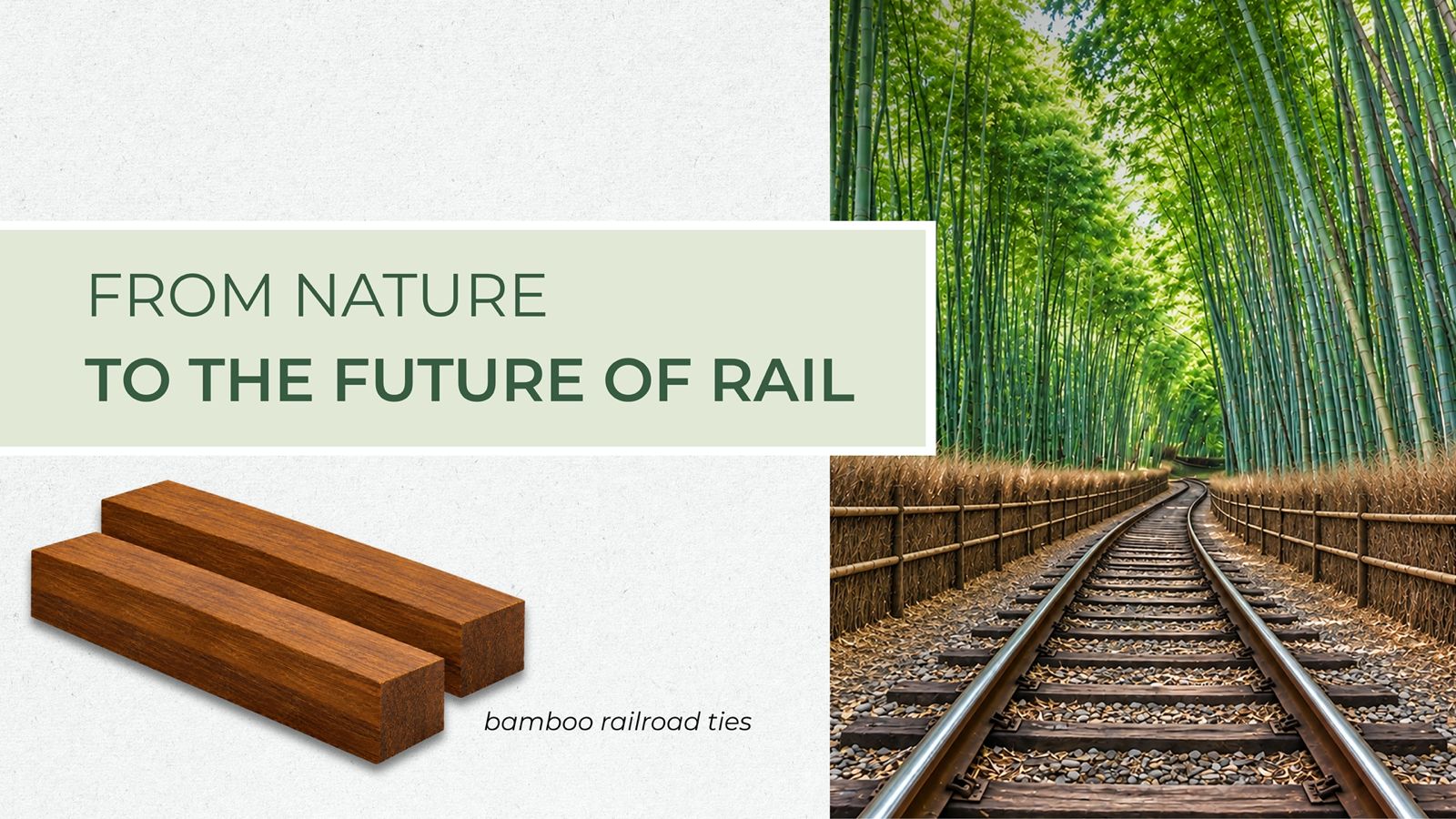
TieBam is revolutionizing the railroad track industry with a patent-approved process that densifies bamboo to create an eco-friendly, cost-effective alternative to traditional wood and concrete railroad ties. Because of its rapid growth, unique mechanical properties, and proprietary transformation process, bamboo can deliver railroad ties that are stronger, more durable, longer-lasting, and more environmentally sustainable than conventional wood ties.


Millions of trees are harvested annually to produce railroad ties, contributing to deforestation and related environmental impacts, including carbon emissions, disrupted water cycles, and soil erosion. Because conventional timber can require decades to reach harvest maturity, replacing a portion of wood-tie demand with rapidly renewable bamboo can significantly reduce pressure on forest resources.
Bamboo's rapid growth cycle provides a highly renewable source of raw material. Its rapid regeneration requires less land to maintain a continuous supply compared with slower-growing timber species. The shorter production cycle also provides greater predictability for cultivation, inventory planning, and long-term supply management.

TieBam ties utilize a borate pretreatment and a custom-formulated, non-toxic resin designed to impregnate the bamboo fibers. As a result, creosote treatment is not required.
TieBam's potential manufacturing and supply-chain operations in South America will create opportunities for bamboo farmers, processors, manufacturers, and transportation providers in countries such as Brazil, Colombia, and Ecuador. By creating a commercial market for sustainably cultivated bamboo, TieBam will support rural economic development, provide additional income opportunities for farmers, and help build a long-term regional manufacturing and supply network.

As the fastest-growing land plant on Earth, bamboo can be harvested within three to four years without damaging the plant or the surrounding ecosystem.

The green outer layer of the bamboo culm is removed, and the bamboo is naturally dried to reduce moisture content. A Borates preservative treatment is then applied to protect the material against insects and environmental elements.

Bamboo is transported by bulk freight from Brazil, Colombia, and Ecuador to the manufacturing facility.

Resin is impregnated into the bamboo fibers as the material is compressed and molded using a 6,500-ton hydraulic press.